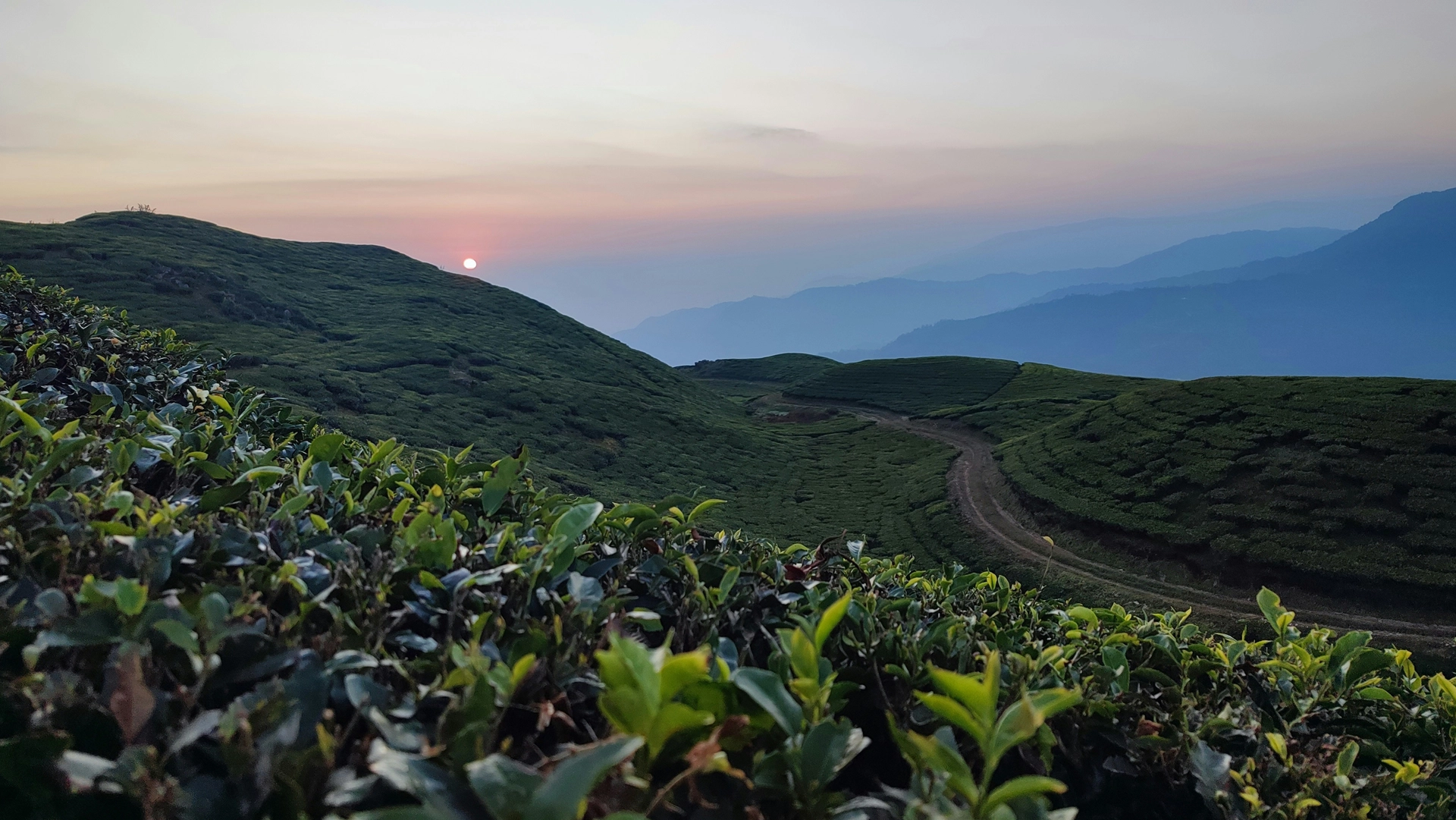
Welcome to Nepal, the land of the Himalayas.
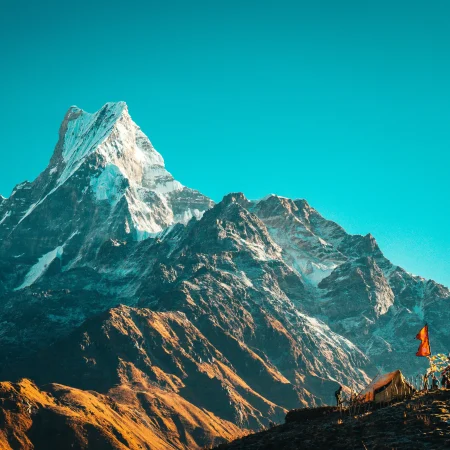
Nepal is the home to the world’s highest mountain and is regarded as heaven for trekkers and adventure enthusiasts. Trekking in the unexplored trails of the Himalayas is always a unique experience, whether you are making a trek for the very first time or you have been before a number of times. The Everest region to the east and the Annapurna region to the west, with their different peculiarities, make Nepal the most picturesque destination in the world.
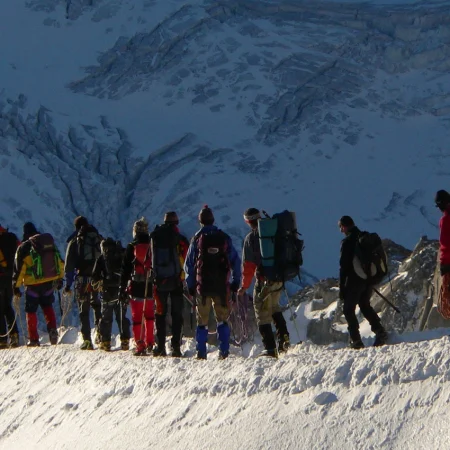
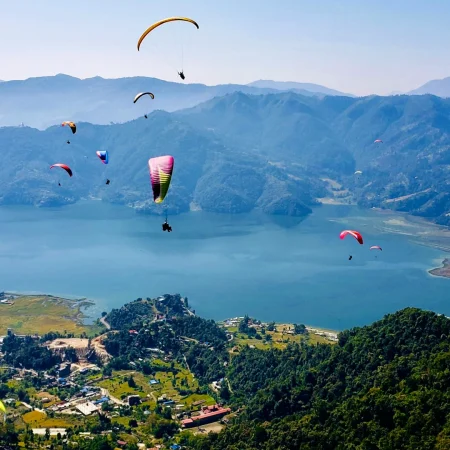
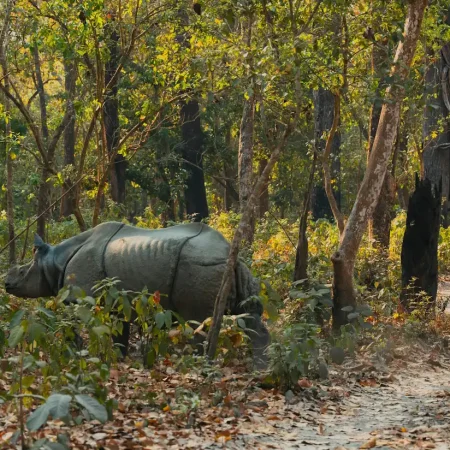
Nepal offers some of the most spectacular and unrivaled experiences in the world. Due to extreme geography, Nepal can boast its status as an adventure paradise. Adventure activities in Nepal include trekking, mountaineering, rock climbing, white water rafting, kayaking, mountain biking, and paragliding. Nepal is the home to 8 of the highest Mountains in the world, including Mt. Everest. From the highest point on the earth to near sea level in its south, Nepal also boasts sub-tropical jungles, home to the elusive Bengal Tiger and the proud Asiatic one-horned Rhino.
Over the course of history, Nepal became an established stopping point for traders and pilgrims alike on their great trans-Himalayan journeys. As its status grew over the centuries, Nepal became a melting pot of cultures, predominantly a mix of Hinduism and Buddhism. This unique history is still observable today as Nepal can be considered a living museum. The ancient temples and shrines, still worshiped, are central to the lives of millions of Nepalese. Kathmandu Valley alone has seven world heritage sites recognized by UNESCO. Visitors are welcome to these sites to capture a glimpse of the ancient mystical Nepal.
-

Capital
Kathmandu -

Area
147,181 sq. KM. -

Population
Appx. 30 Million -

Currency
Nepalese rupees -

Official Language
Nepali -

Calling code
+977 -

Safety
Safe Tourist Destination
Featured Trips
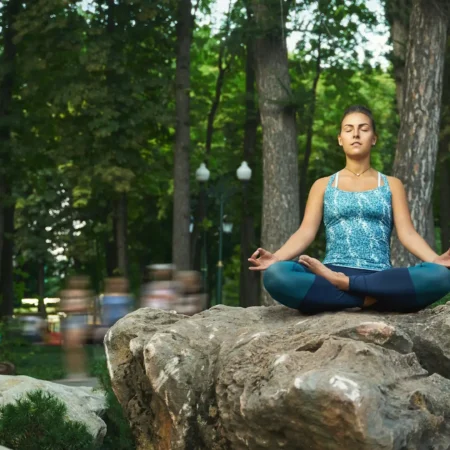
Duration: 6 Days
Max altitude: 2,100m (Nagarkot)
Price starts from: USD 485
All Women Nepal Wellness Tour: Ayurveda, Yoga & Digital Detox – 6 days
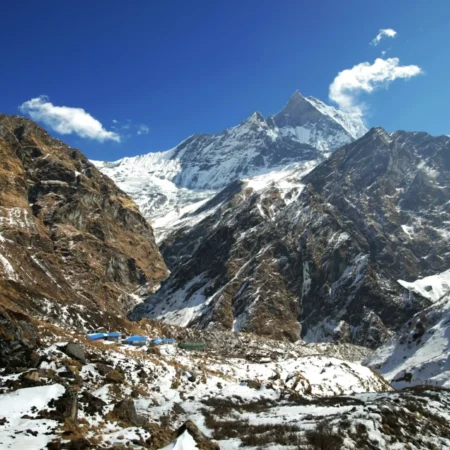
Duration: 10 Days
Max altitude: 4,130 m (Annapurna Base Camp)
Price starts from: USD 567
Annapurna Base Camp Trek – 10 Days
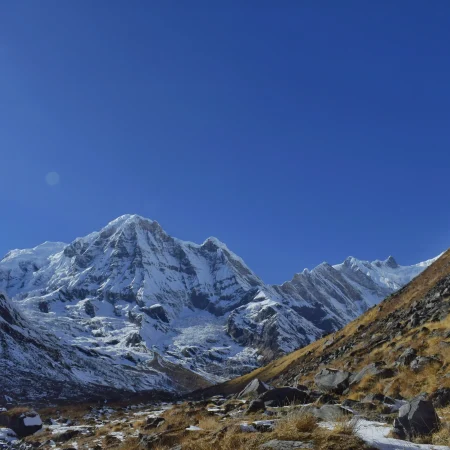
Duration: 08 Days
Max altitude: 4,200 m (Annapurna North Base Camp)
Annapurna North Base Camp Trek – 08 Days
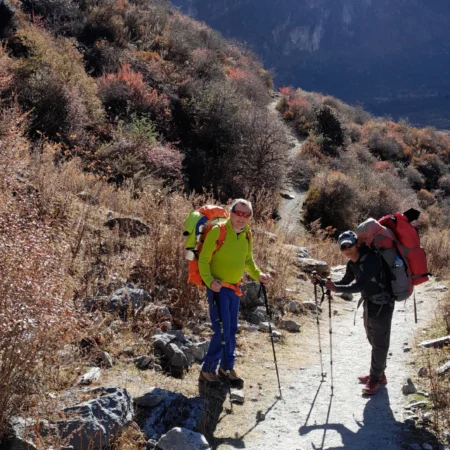
Duration: 12 Days
Max altitude: 4,500 m (Mardi Himal Base Camp)
All Women Trek to Nepal: Mardi Himal Base Camp – 12 Days | Fixed Departure
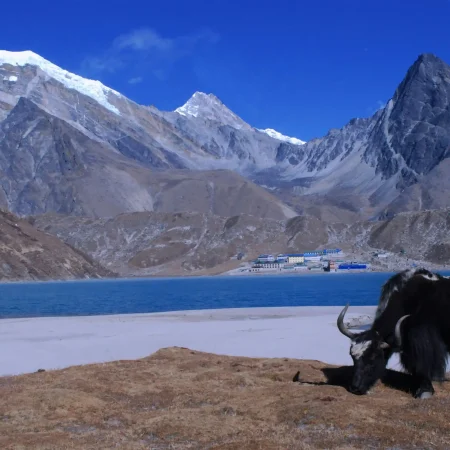
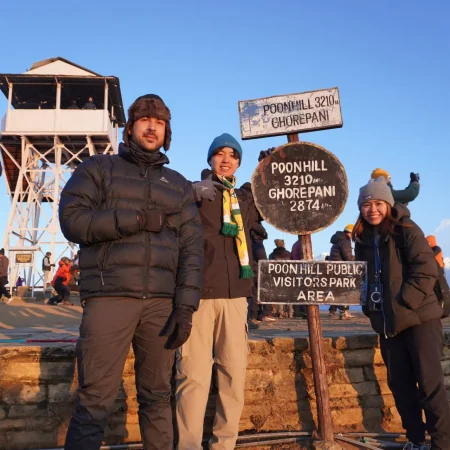
Duration: 7 Days
Max altitude: 3210 m
Price starts from: USD 890
Ghorepani Poon Hill Trek for Beginners – 7 Days
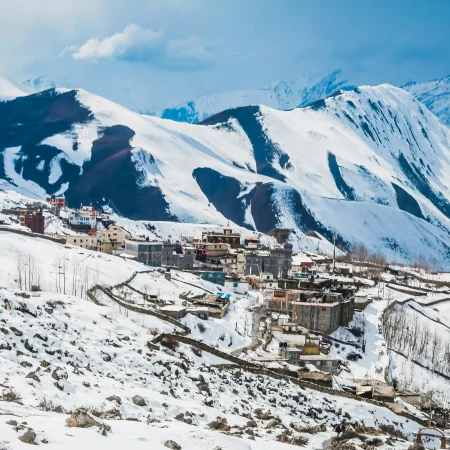
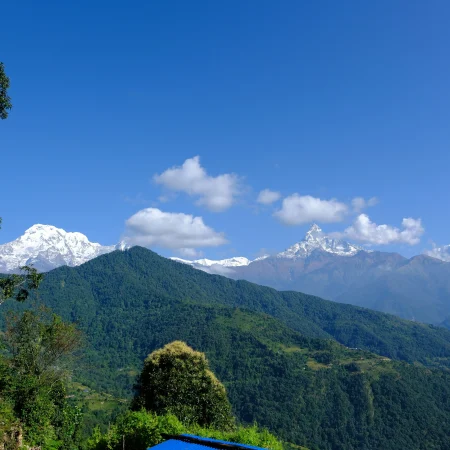
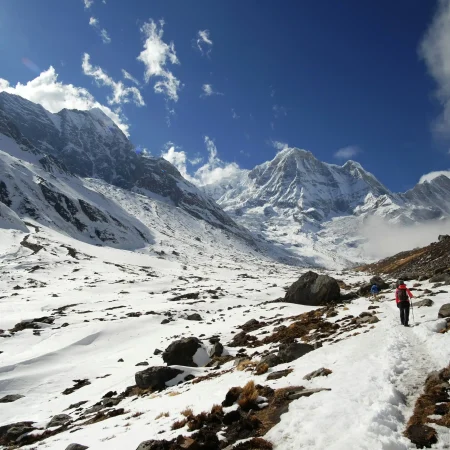
Duration: 13 Days
Max altitude: 1730m
Price starts from: USD 1,325
All Women Immersive Experience – 13 Days | Fixed Departure
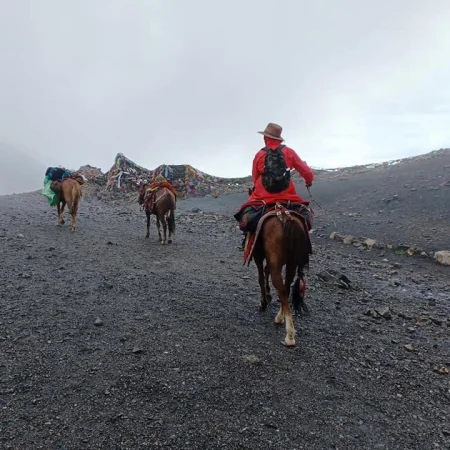
Duration: 11 Days
Price starts from: USD 2,075
10N-11D Horse Ride Expedition through Nepal’s Mustang Region
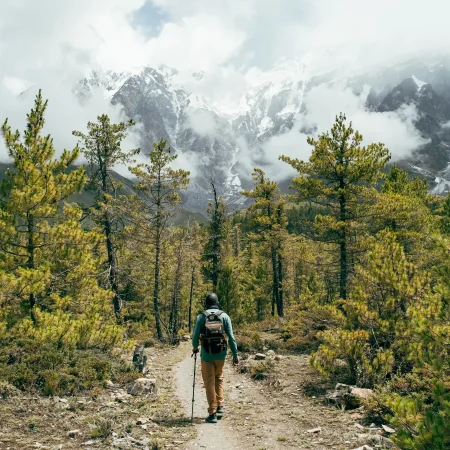
Duration: 14 Days
Max altitude: 3710 Metres
Price starts from: USD 7,460
Shinta Mani Mustang Luxury Tours
Activities to do in Nepal
Nepal Visa Information
Nepal Visa can be obtained at your nearby Nepalese Embassy, consulate or Nepal Entry point upon arrival.
As per the new fee structure,
US $ 25 for 15 days Multiple Entry
US $ 40 for 30 days Multiple Entry
US $ 100 for 100 days Multiple Entry
Tourist Visa can be extended by paying US $ 2 or equivalent Nepalese currency per day.
Multiple Entry facility can be obtained only for the extension period by additional US $ 20 and visa fee for the extended period.
Similarly, tourists can renew their visa by paying Nepalese currency equivalent to US $ 3 on the regular visa extension fee.
Main Sites of Touristic Attraction in Nepal
Kathmandu Durbar square
Old Royal Palace and its vicinity is one of the major attractions in the central area of old part of Kathmandu city where ancient monuments , Temples dedicated to lord Shiva, Vishnu and Kali, are among many of the Pagodas towering and dominating the skyline. Historic buoldings like Kastamandap lending its name to the capital city and the residence of the Living Goddess Kumari are the other important sites to be visited.
Patan Durbar Square
Patan or Lalitpur is another sister city situated only a few kilometer away from Kathmandu. It has, like others, the Durbar Square (Palace Complex) with the concentration of ancient Pagodas and north Indian Mogul types of Shikhara temples in a small area. Patan is the most ancient city pre-dominated by Buddhist residents. Most of the Bronze and Cupper sculpture are being manufactured here, thus called a city of fine arts.
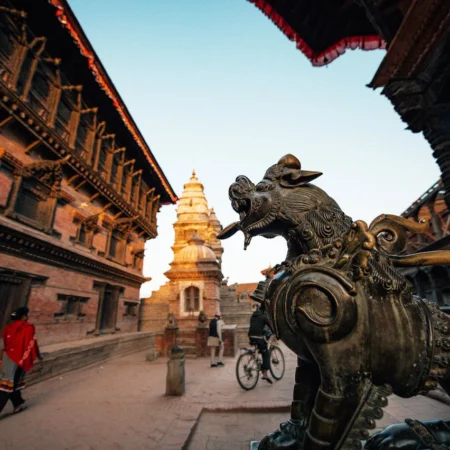
Bhaktpur Durbar Square
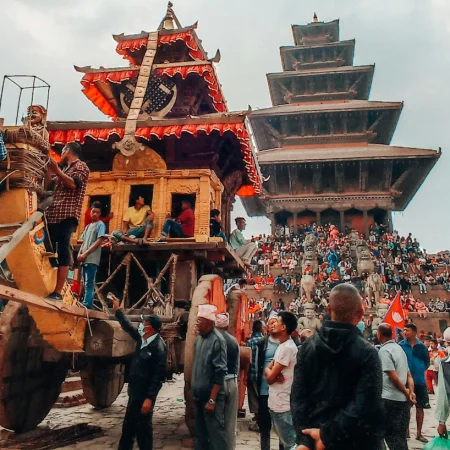
Another major attraction within the valley is the medieval city of Bhaktpur (City of devoties), established in 9th century, with its unique outlook. Like in the other two cities here too, one can visit the old palace of Malla Kings and other beautiful architecture.The glorious five storied ‘Nyatapola’ Temple and the ‘Fiftyfive window Palace’ are among many attractions here. Bhaktpur is equally famous for its woodcarving , clay works and typical Nepali cap.Bhaktpur today sets an example to its other sister cities as to how one can preserve an ancient city and its outlook for future generation.
Pashupatinath
Holiest among the sites of Pilgrimage for entire Hindus,the temple of Pashupatinath, dedicate to Lord Shiva,was built originally arround 5th century and at the bank of holly river bagimati.Lord Pashupatinath is not only the God of Destruction of the ignorance but also the liberator of the human suffering by giving them a new life. Cremation of the hindu dead bodies together with many other rites and rituals take place here at temple area attracting thousends of devoties and hollymen to come here to Pashupatinath,the guardian deity of nepalese, who try to be here at least once in their life time.
Swayambhunath Stupa
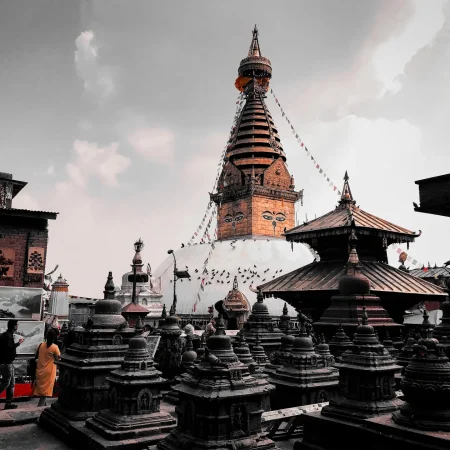
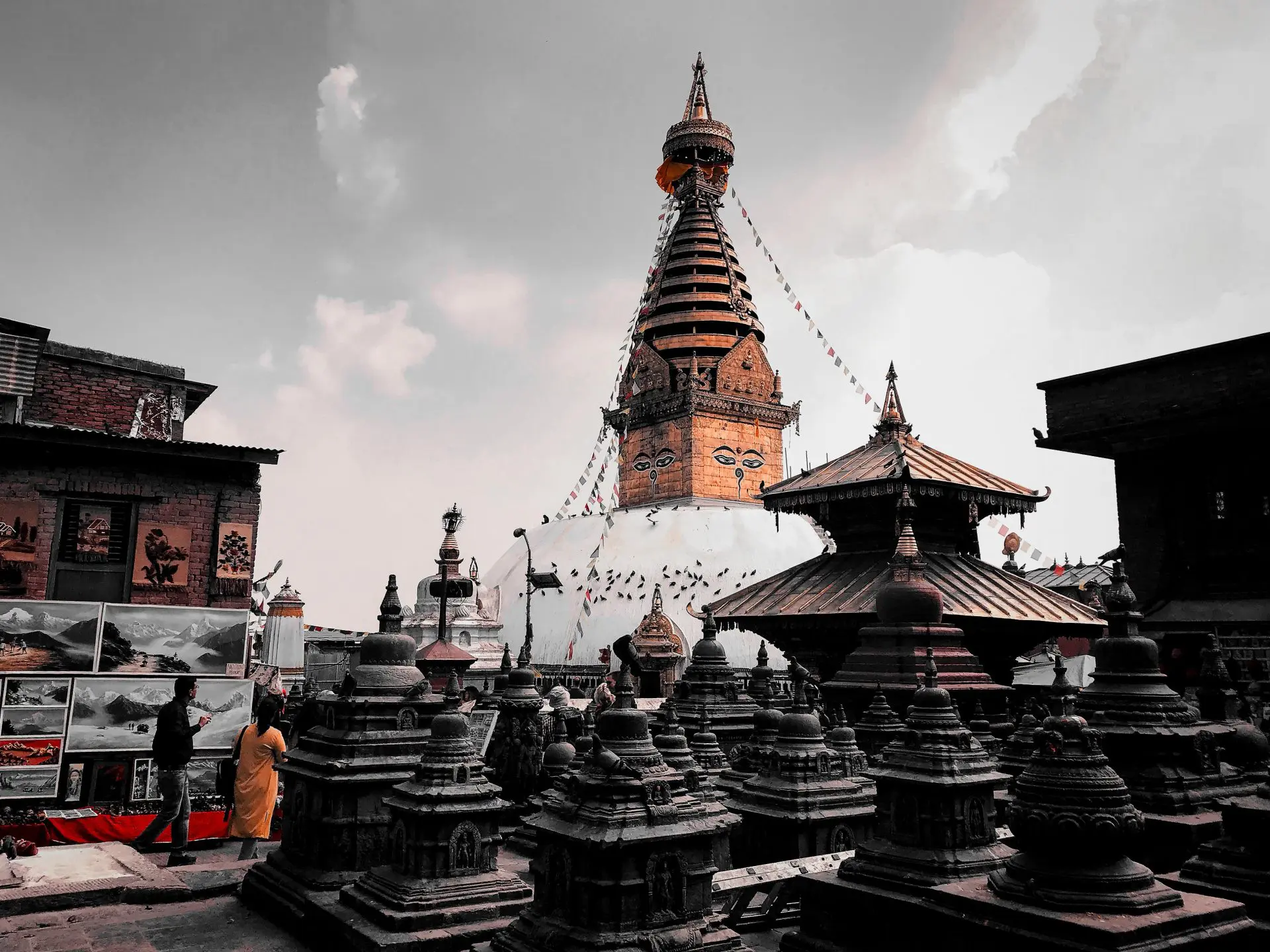
Swyambhunath is the oldest Stupa of Nepal. It is situated on top of a mound about 5 km west of kathmandu city. This is one of the main holly destinations for buddhists. This 2500 years old heritage site offers a maginificient view of Kathmandu valley. Due to a large nummer of rhesus monkeies arround here, tourist often call this as ‘ Monkey Temple’.
Bouddhanath
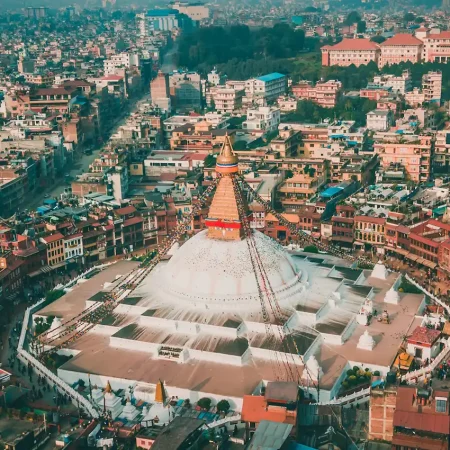
Believed to be built arround the Lichhavi era ,this monument hauses relics of Kashyapa Buddha and is the focal point of religious activities of the Buddhists of tibiten origion. This uniquely constructed stupa in Mandala form,is sorrounded by numerous tibetan buddhist Monastries. One has plenty of opportunity to have an insight into tibetan religion and way of life.
Kirtipur
Due to its significant strategic location, Kirtipur was attacked a nummer of times by the Gurkhas under Prithvi Narayan Shah, the founder of modern Nepal, in course of unification till it came under his controll in the year 1767. It is one of the cities within Kathmandu-Valley, having typical newari architecture and old 18th century atmosphere even today to see and feel. Chilandeo Stupa, Bagbhairab and Umamaheshor Temple are the main attractions in Kirtipur.
Dakshinkali
Situated in a deep a gorge like location at the southern end of kathmandu valley,this open temple of Dakshinkali is one of the most popular hindu temples in Nepal. Here the Goddess Durga will be worshiped in the frightening form of Kali, twice a week Saturday and Tuesday together with the animal sacrifice. At weekend, there are many people going picnic arround this temple by making this place a popular spot for spending a day for Kathmanduits.
Changunarayan
The Changu Narayan, a Vishnu temple, is situated 18km northeast of Kathmandu city in a ridge. It is probably oldest temple in the entire Kathmandu valley because main temple was built arround 4th centuary AD. It was destroyed, however, several times by fires and earthquakes. The present Pagode was rebuilt in the year 1702. It belongs to old heritage site enlisted by UNESCO.
Pokhara
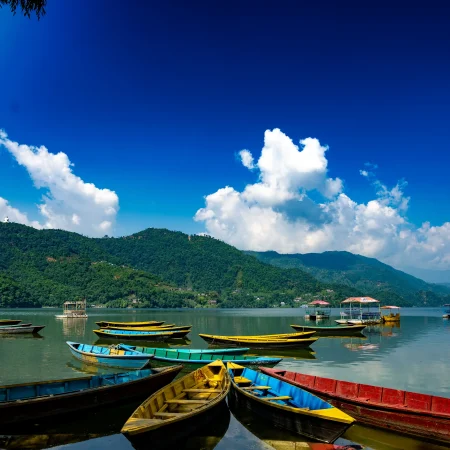
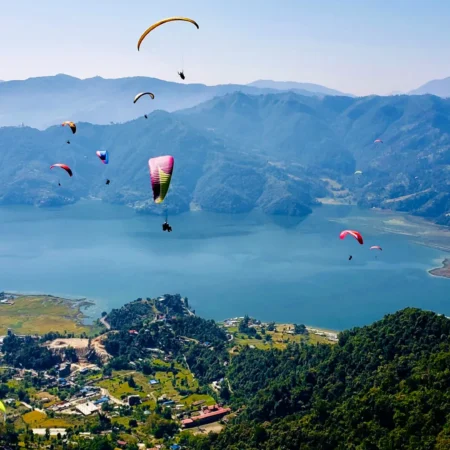
Pokhara,situated 200 km west of Kathmandu, is the most important tourist destination after Kathmandu. This is the entry point for famous Trekking routes to Dhaulagiri, Annapurna and Mustang region. It is a meeting point for nature and culture.Trails for different excursions and hiking are available to suit individual interest and needs. When the weather permits one can enjoy the panoramic view of Annapurna and Dhaulagiri range hardly 25km away from Pokhara. One can enjoy the tranquility and peace while doing boating at Fewa Lake in one hand and see the grand view of the snow clad mountains on the other.
Lumbini
Lumbini, the birth place of historical Buddha Sakyamuni, is located about 280km southwest of Kathmandu in the Terai belt. It is the site of pilgrimage for entire Buddhists from all over the world. There are a large nummer of monasteries, temples and Stupas within the Lumbini Garden as objects of religious importance.
Tansen
Tansen is a beautiful hill station situated about 290 km west of Kathmandu at an altitude of 1450m. There are many similarities when we compare with old part of Kathmandu city. One can have nice view of himalaya from here, and the valley below Tansen.A drive leading to and from Tansen offers a view of changing landscape in the middle mountains, the Mahabharata range.
Nagarkot
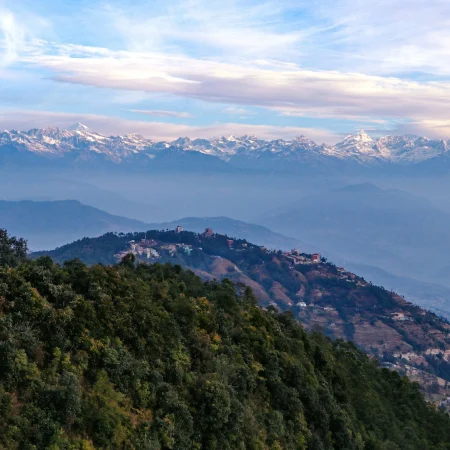
Nagarkot is situated 32 km northeast of Kathmandu in an altitude of 2164 m. It is one of the ideal places for viewing sunrise and sunset reflacting the changing colours on the Himalaya.
Dhulikhel
Dhulikhel lies 30km est of Kathmandu enroute to Tibetan boarder in an altitude of 1480m. This is one another famous point to see the himalaya and the reflexion of sunrise and sunset on them. This is also vantage point to start excursion to Namobuddha or Panauti.
Daman
Daman is a small village located approximatly 80 km south of Kathmandu in an altitude of 2400 m. From here one can have a fascinating view of the entire Himalaya range biginning from Dhaulagiri in the west and Mt. Everest in the east.
Bandipur
Bandipur is a small newari settlement that lies approx. 140 km from Kathmandu between Kathmandu and Pokhara. It used to be a transit and commercial point between the southern Terai and Tibet. A good view of the western mountains can be enjoy.
Gorkha
The small town of Gorkha , which lies 24 km north of the main highway(Anbukhaireni) between Kathmandu and Pokhara in an altitude of 1150 m. Gorkha is the ancient kingdom of Shah dynasty and the home of the Gurkha soldiers, before the unification process was started.Old Royal Palace and a few Temples are among the objects of the interest in Gorkha